🦵 Not sure what's causing it? Take the 5-question knee quiz.
Find My Pattern →What Footwear Features Matter Most When I Have Knee Pain?
You're walking through a store, browsing shoes, and you realize you have no idea what you're actually looking for anymore. The pair you wore last week felt fine, but your knee disagreed by evening. Now you're standing there wondering if the problem is the sole, the heel, the arch support—or if shoes even matter at all. The truth is, they matter quite a bit, but probably not in the way you think.
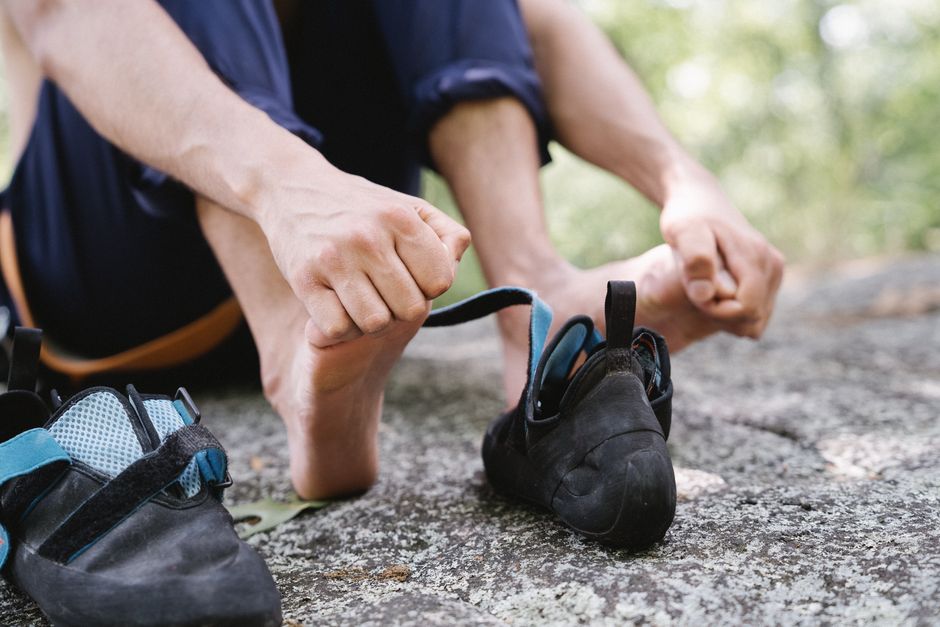
How shoes connect to what your knee feels
🦵 Not sure what's causing your knee pain?
Answer 5 quick questions and get a personalised result.
Find My Pattern → 60 seconds · No sign-upYour knee doesn't work in isolation. It's part of a chain that starts at your foot and runs up through your hip. When your shoe doesn't support your foot properly, that chain gets disrupted. Your foot may roll inward or outward slightly—a movement called pronation or supination. Your shin may rotate a little differently than it should. Your knee, sitting in the middle, absorbs the extra stress.
This can happen in several ways. A shoe with minimal arch support may allow your foot to flatten more than usual, which can shift how force travels through your knee. A heel that's too high can tilt your pelvis forward, changing the angle at which your knee bends and straightens. A sole that's too soft or too rigid can fail to cushion impact properly, leaving your knee to handle shock it wasn't designed to manage alone. Sometimes the problem isn't dramatic—it's just that your foot isn't stable enough, so your knee muscles work overtime to compensate, and that fatigue turns into pain by the end of the day.
Features that actually make a difference
Arch support that matches your foot. This is the first place to start. Your arch isn't just for comfort; it's a structural element. When it collapses or isn't supported, your whole lower leg alignment shifts. You don't necessarily need a rigid orthotic—many people do well with a moderate, firm arch that keeps the foot stable without feeling restrictive. If you've never paid attention to your arch, try pressing your thumb into the inside of your foot, just behind the ball of your foot. That's roughly where the arch should feel supported, not spongy.
A heel that's modest, not dramatic. High heels shift your weight forward and tilt your pelvis, which changes how your knee tracks when you walk. A completely flat shoe can be just as problematic—it offers no shock absorption. Most people with knee pain do better with a heel height between half an inch and one and a half inches. This is often called a "neutral" or "everyday" heel. It's not exciting, but it works.
Cushioning that's firm enough to feel it. Soft, pillowy soles feel nice for about ten minutes, then your foot sinks and loses stability. You want cushioning that absorbs impact without letting your foot collapse into it. Press your thumb into the sole—it should compress slightly but push back. If it feels like pressing into a marshmallow, it's too soft.
A snug heel cup. Your heel should feel held in place, not loose. A loose heel means your foot slides slightly with each step, which destabilizes your ankle and knee. When you put on a shoe, your heel shouldn't move around inside it. This is one of the easiest things to test before buying.
Toe box width that allows your toes to spread slightly. A cramped toe box forces your foot into an unnatural position and can affect how your whole foot strikes the ground. You should be able to wiggle your toes a little, and the widest part of your shoe should match the widest part of your foot. This varies by brand—some run narrow, some wide—so trying shoes on is worth the time.
What to be cautious about
Avoid shoes that are significantly older than you remember. Cushioning breaks down over time, usually within 300–500 miles of walking. If you've had a pair for a year or more and wear them regularly, the support is likely compromised even if they look fine.
Don't assume that "supportive" or "orthopedic" labels mean the shoe will work for you. These terms aren't regulated, and what supports one person's foot may not support yours. The only real test is how your knee feels after wearing them for a few hours and into the next day.
Skip shoes with very stiff soles that don't bend naturally. Your foot needs to flex when you walk. A sole that's too rigid can actually increase stress on your knee because your leg can't move through its normal range.
Be wary of making a dramatic change all at once. If you've been wearing one type of shoe and switch to something completely different, your knee and lower leg muscles need time to adapt. A sudden change can actually trigger pain. If you're switching to new shoes, wear them for short periods first—maybe an hour or two—before wearing them all day. People dealing with this frequently also notice how to test footwear comfort without a long painful walk, particularly after extended periods of inactivity.
When your shoes aren't enough
If you've tried different shoes and your knee pain hasn't improved after a few weeks, or if the pain is sharp, severe, or getting worse, that's the time to talk to someone. A physical therapist or sports medicine doctor can assess how your foot and knee actually move together, not just look at your shoe. Sometimes the problem isn't your shoes at all—it's muscle weakness, movement patterns, or an underlying issue that shoes alone can't fix.
Safety note: If you have severe pain, significant swelling, a recent injury, fever, numbness, or difficulty bearing weight, speak with a qualified healthcare professional promptly.
Moving forward with your footwear
The goal isn't to find the "perfect" shoe—that's unrealistic. The goal is to find shoes that keep your foot stable and supported throughout the day without causing new problems. Start by noticing what your feet and knees feel like in different shoes. Does one pair feel fine for an hour but your knee aches by evening? That's useful information. Does another pair feel stable and your knee stays quiet? That's your baseline.
When you're ready to buy new shoes, try them on in the afternoon when your feet are slightly swollen—closer to how they'll be when you actually wear them. Walk around the store for at least ten minutes. Pay attention to whether your foot feels held in place or if it's sliding around inside the shoe. That's often more telling than any label or price tag.

Helpful Next Step
As an Amazon Associate, we may earn from qualifying purchases. This does not affect the price you pay.
Helpful Support Option
If this type of knee discomfort shows up during daily movement, light support may help reduce strain on the joint while you work on the underlying cause.
See knee support options on AmazonHelpful Next Step
If gentle support helps during recovery, you can check a simple support option that many people use in daily life.
This content is for educational purposes only and does not constitute medical advice. Always consult a qualified healthcare professional for diagnosis and treatment.