🦵 Not sure what's causing it? Take the 5-question knee quiz.
Find My Pattern →Knee Stiffness After Sitting at Desk
Something most people get wrong about knee stiffness after sitting at desk: it doesn't automatically mean cartilage is damaged or worn down.
You were just doing something normal — walking, sitting, going about your day — and suddenly your knee had other plans. Knee Stiffness After Sitting at Desk catches a lot of people off guard, partly because it often appears without any dramatic injury or clear cause. A common pattern is that addressing the right factor early makes everything else easier.
The Short Answer
Here's what most people want to know right away: knee stiffness after sitting at desk isn't, in most cases, a sign of catastrophic damage inside your joint. It usually points to something mechanical — a loading issue, a muscle imbalance, or a movement pattern that's been accumulating over time. That's actually encouraging, because mechanical problems respond well to the right approach.
The knee handles forces equal to three to five times your body weight with every step. It guides movement through a complex range of motion while caught between two lever arms — the thigh above and the shin below. When that system gets disrupted, even slightly, the joint sends a pain signal.
What disrupts the system varies. For some it's quadriceps tension that hasn't been addressed. For others it's a movement habit developed over years. For others still, it's simply too much load over too little time. Most of these causes are genuinely addressable.
Why This Happens
Understanding what's driving knee stiffness after sitting at desk puts you in a far better position to deal with it. Here are the most common contributors:
- Quadriceps weakness or fatigue — The muscles at the front of your thigh are the knee's primary shock absorbers. When they're underpowered, the patellofemoral joint takes on load it wasn't designed to handle alone.
- Tight structures around the knee — The IT band, hip flexors, calf, and hamstrings can all create tension that affects patellar tracking. Tightness elsewhere in the chain often expresses itself as knee discomfort rather than pain at its source.
- Movement mechanics and alignment — How your foot contacts the ground, how your hip sits in the socket, and tibial rotation during movement all determine how force travels through your knee. Small imbalances, repeated thousands of times, add up.
- Cumulative load — A sudden increase in activity is a classic trigger. The knee simply hasn't had time to adapt. This is especially worth considering if your symptoms came on gradually after starting something new.
- Low-grade joint inflammation — Without visible swelling, the joint lining can become mildly inflamed. This is especially common after periods of unusual activity or extended inactivity.
This often happens when multiple small contributors build up over time rather than one dramatic event
The Mistake Most People Make
When knee stiffness after sitting at desk starts, the instinct is usually one of two things: push through it and hope it settles, or stop all activity completely. In many cases, both of these approaches tend to backfire.
Pushing through pain — especially when your movement pattern is part of the problem — can worsen the underlying issue over time. But complete rest has real downsides too. Muscles weaken within days, joints stiffen, and when you return to normal activity you're less prepared than before.
The better path is modified activity. Keep moving, but choose movement that doesn't load the knee the way that triggers your pain. Gentle walking is usually fine when running isn't. Cycling or swimming may be comfortable when stairs aren't. The goal is to maintain function while giving the irritated tissue time to settle.
Pro Tip: Place a rolled towel under your knee when sitting for long periods. It keeps the joint in a slightly extended position, which reduces compression in the patellar tracking groove and can cut that post-sitting ache significantly.
As an Amazon Associate, we may earn from qualifying purchases. This does not affect the price you pay.
Helpful Support Option
If this type of knee discomfort shows up during or after prolonged sitting, light compression may help reduce stiffness and support the joint during movement.
See knee compression optionsWant a more personalised recommendation? Take the 5-question quiz →
What to Try at Home
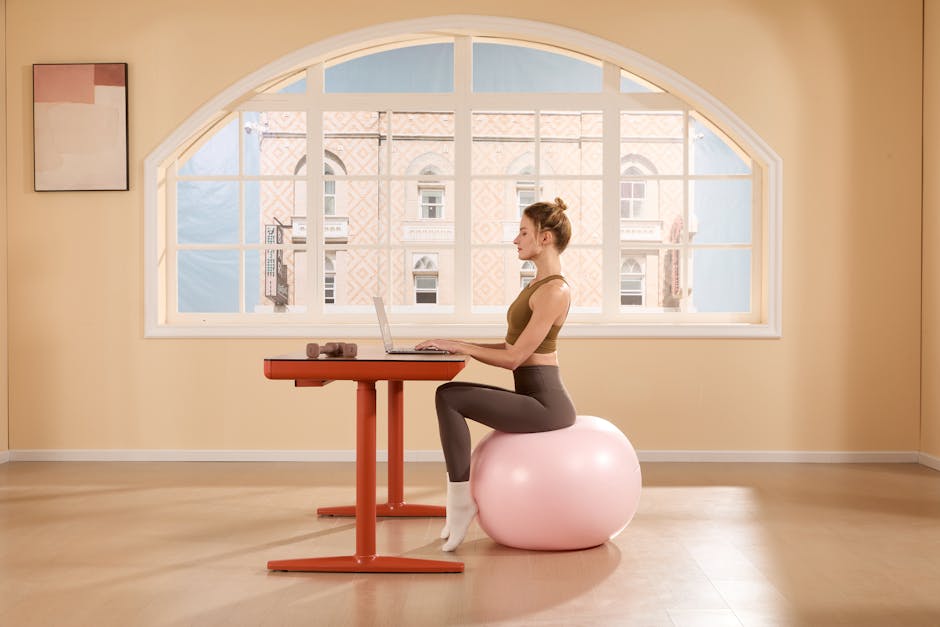
These are general comfort measures — not a treatment plan. That said, most people with knee stiffness after sitting at desk find one or more of the following genuinely helpful:
- Ice for acute flare-ups — If the knee feels warm, noticeably swollen, or was recently aggravated, apply ice wrapped in a cloth for 10 to 15 minutes. Don't apply ice directly to skin.
- Review your footwear — Worn-out or unsupportive shoes alter how impact travels through your lower limb with every step. It's one of the most commonly overlooked factors, and a change here can produce surprisingly fast results.
- Gentle strengthening at home — Straight-leg raises, glute bridges, mini-squats, and wall sits can all build the muscular support around your knee without high load. Start conservatively and build over several weeks.
- Movement variation — If you've been in the same position for hours, change it. Sustained positions and repetitive patterns are common contributors to knee irritation.
- Pay attention to patterns — When's the pain worse? When's it better? These patterns are useful information — for you, and for any professional you might see.
A practical way to look at this is that addressing VMO activation and patellar tracking together tends to produce better results than tackling them separately.
Not sure what's causing your knee pain? Take our 5-question quiz to find your pattern — Start the quiz →
When It's Time to See Someone
Most cases of knee stiffness after sitting at desk will improve with time and sensible self-management. But some situations genuinely need professional input, and sooner is usually better.
See a physiotherapist or doctor if:
- Symptoms have been present for more than two to three weeks without improvement
- The pain is sharp, severe, or consistently disrupting your sleep
- There's noticeable swelling, redness, or warmth around the joint
- You heard or felt a pop, or had a specific injury or fall
- You're having difficulty bearing weight or walking normally
- Symptoms are getting clearly worse rather than gradually better
Safety note: If you have severe pain, significant swelling, a recent injury, fever, numbness, or difficulty bearing weight, speak with a qualified healthcare professional promptly rather than waiting.
Frequently Asked Questions
Q: Is it safe to exercise with knee stiffness after sitting at desk?
A: Gentle, low-impact movement is often beneficial — walking, swimming, and cycling tend to be well-tolerated. Avoid anything that sharply increases the discomfort. A physiotherapist can help identify which exercises are right for your specific situation and severity.
Q: What happens if I ignore knee stiffness after sitting at desk?
A: In some cases, minor knee discomfort does resolve on its own. But consistently ignoring pain — especially if it's altering how you move — can allow the underlying cause to worsen. Most people find that early, sensible attention leads to faster recovery than waiting it out indefinitely.
Q: Can I still walk normally when I have knee stiffness after sitting at desk?
A: Many people manage normal walking despite this kind of discomfort. If walking causes you to limp or noticeably change your gait, though, that's worth addressing — compensating patterns often create new problems in the hips, lower back, or opposite knee over time.
What To Do Tomorrow Morning
Knee stiffness after sitting at desk doesn't have to define your days. A common pattern among people who recover well isn't luck or a magic intervention — it's early attention, smart movement, and a willingness to adapt. Start with what you can manage today. You don't need to do everything at once — one consistent change is worth ten half-started routines.
Helpful Next Step
This content is for educational purposes only and does not constitute medical advice. Always consult a qualified healthcare professional for diagnosis and treatment.