🦵 Not sure what's causing it? Take the 5-question knee quiz.
Find My Pattern →Knee Pain From Carrying Heavy Loads up Stairs at Work
You finish your shift and realize your knee has been quietly complaining for the last three hours. Not screaming—just a dull, persistent ache that only got worse as you climbed the back stairwell with boxes or equipment. The pain wasn't sharp enough to stop you mid-task, so you kept going. But now, sitting down at home, your knee feels stiff and heavy, and you're already dreading tomorrow's climbs. This is different from occasional soreness. It's becoming a daily negotiation between what your job demands and what your knee can handle.
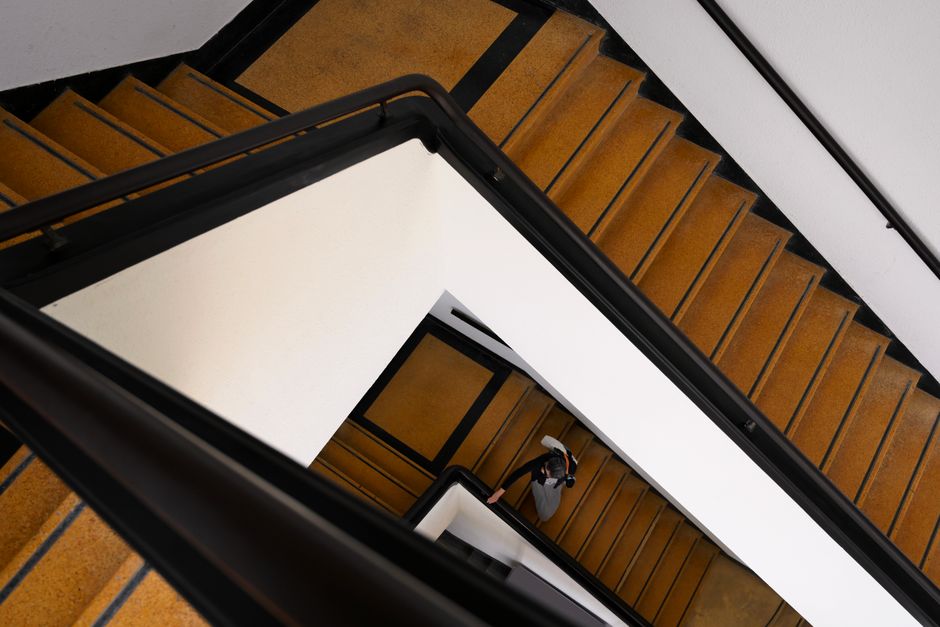
Why stairs with weight create this specific problem
🦵 Not sure what's causing your knee pain?
Answer 5 quick questions and get a personalised result.
Find My Pattern → 60 seconds · No sign-upCarrying a load up stairs puts your knee in a vulnerable position that flat-ground work doesn't. When you step up while holding weight, your knee has to bend deeper, absorb more force, and stabilize a heavier load all at once. Your quadriceps (the muscle on the front of your thigh) works overtime to lift both your body weight and whatever you're carrying. The kneecap itself—the patella—experiences increased pressure as it tracks through the groove in your thighbone. If that tracking isn't perfectly aligned, friction builds.
The descent is often where the real trouble starts. Walking down stairs while loaded forces your quadriceps to work eccentrically, meaning it lengthens while contracting to control your descent. This type of muscle work can cause micro-damage to fibers and surrounding tissues, leading to inflammation that may not show up until hours later. If you also experience both knees hurt going up and down stairs, the two issues often share the same underlying cause.
Repetition compounds the problem. One trip up the stairs with a heavy box might feel fine. But five trips, ten trips, day after day? The tissue doesn't fully recover between climbs. Small irritations accumulate. What began as occasional tightness can shift into chronic discomfort—that threshold moment when you stop thinking of it as a bad day and start thinking of it as your new normal.
Job security and economic pressure can delay seeking help. Many people push through pain because reporting it feels risky, or because stopping work isn't an option. This delay means the underlying irritation gets worse, not better. The longer you compensate—favoring one leg, gripping railings harder, moving slower—the more other parts of your knee and hip have to work differently, creating new aches. This pattern is related to knee aches after climbing several flights of stairs, and the same management principles often apply.
What you can try to reduce the load on your knee
Adjust how you carry weight. Instead of gripping items in front of your body (which throws your center of gravity forward), try carrying boxes close to your torso or distributing weight between both arms. Some people find that holding something at chest height, rather than waist height, changes how their knee tracks. Small adjustments to grip or positioning can shift stress away from the joint itself.
Take smaller, deliberate steps on stairs. The temptation is to move quickly to finish the job, but rushing increases impact and forces your muscles to work harder. Slower steps, even if they take longer, allow your quadriceps to control the movement rather than absorb sudden jolts. Pause between steps if you need to. Your employer benefits more from you staying healthy than from you moving fast and getting injured.
Ice your knee after work, not before. After climbing stairs with weight, inflammation can take hours to develop. Icing for 15–20 minutes in the evening—particularly on days when you carried heavier loads—may help reduce swelling before it stiffens overnight. Cold doesn't fix the problem, but it can reduce the stiffness you wake up with and the morning anxiety about the day ahead.
Strengthen your quadriceps and glutes in ways that don't hurt. Stairs are hard. Flat-ground exercises are easier. Straight-leg raises (lying on your back, lifting one leg at a time without bending the knee) or glute bridges (lying on your back, pushing through your heels) can build strength without the impact of stairs. Stronger thigh muscles support your kneecap better and reduce strain during work climbs. Even 10 minutes three times a week can make a difference over weeks.
Wear shoes with real support. Worn-out sneakers or shoes with no arch support force your foot to roll inward or outward slightly with each step. That small misalignment travels up to your knee. A shoe with a firm sole and proper arch support keeps your foot stable and your knee tracking better. This matters more when you're carrying weight.
When to talk to a healthcare professional
Pain that worsens over weeks, pain that limits your ability to do your job safely, swelling that doesn't decrease overnight, or a sensation of instability or catching in your knee—these are signs to seek professional evaluation. A doctor or physical therapist can assess how your knee is tracking and whether inflammation or structural issues are present. Early evaluation often prevents a manageable problem from becoming a serious one.
Safety note: If you have severe pain, significant swelling, a recent injury, fever, numbness, or difficulty bearing weight, speak with a qualified healthcare professional promptly.

Frequently Asked Questions
Q: Should I apply heat or ice to a painful knee?
A: Cold — ice wrapped in a cloth — works better for acute flare-ups, particularly in the first 24 to 48 hours when the area feels warm or inflamed. Gentle heat tends to be more helpful for muscle stiffness and chronic, recurring aches. Never apply either directly to bare skin.
Q: Should I use a knee brace or compression sleeve for knee pain from carrying heavy loads up stairs at work?
A: A basic compression sleeve can offer comfort and mild support during activity, and many people find it helpful in the short term. Don't rely on it long-term without also addressing the root cause — whether that's strength, flexibility, or movement patterns.
Q: Can I still walk normally when I have knee pain from carrying heavy loads up stairs at work?
A: Many people manage normal walking despite this kind of discomfort. If walking causes you to limp or noticeably change your gait, though, that's worth addressing — compensating patterns often create new problems in the hips, lower back, or opposite knee over time.
What To Do Tomorrow Morning
Most people who take early, sensible action recover well. Start with what you can manage today and monitor closely. If things are not improving after a few weeks, that is the right time to bring in professional support.
Helpful Next Step
As an Amazon Associate, we may earn from qualifying purchases. This does not affect the price you pay.
Helpful Support Option
If this type of knee discomfort flares up on stairs, light compression or a supportive brace can help reduce strain on the joint while you work on strengthening the surrounding muscles.
See knee support options on AmazonHelpful Next Step
If gentle support helps during recovery, you can check a simple support option that many people use in daily life. People dealing with this frequently also notice knee buckles when climbing stairs, particularly after extended periods of inactivity.
This content is for educational purposes only and does not constitute medical advice. Always consult a qualified healthcare professional for diagnosis and treatment.